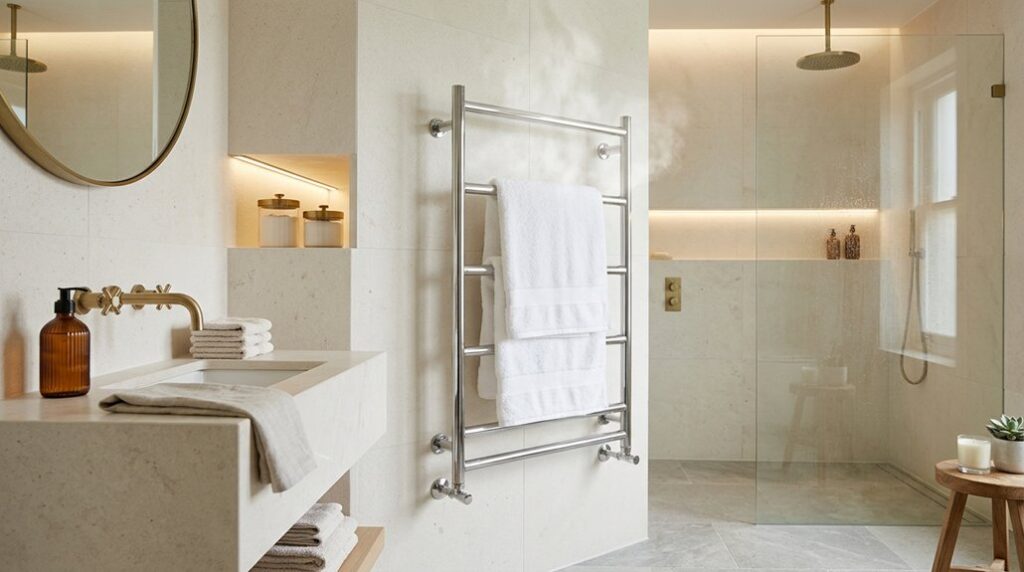
A heated towel rail can change how your bathroom feels within minutes of installation. You’ll have warm, dry towels available while reducing lingering moisture that can encourage mildew. The right rail also uses vertical wall space efficiently, supports better heating control, and adds a clean architectural detail. To make the upgrade worthwhile, you’ll need to think about sizing, heat output, power source, finish, and safe installation—because the wrong choice can undermine the entire refit.
Key Takeaways
- Heated towel rails combined efficient towel drying with space heating, eliminating the need for a bulky conventional radiator.
- Vertical and ladder-style designs maximized wall space, improving circulation and making the refitted bathroom feel more spacious.
- Timers and thermostatic controls provided warm, dry towels when needed while helping reduce unnecessary energy consumption.
- Durable finishes, including chrome, stainless steel, and matte black, added style while resisting corrosion in humid bathroom conditions.
- Correct sizing, positioning, IP rating, and professional electrical testing ensured safe, comfortable, and reliable everyday operation.
Why Heated Towel Rails Changed the Bathroom
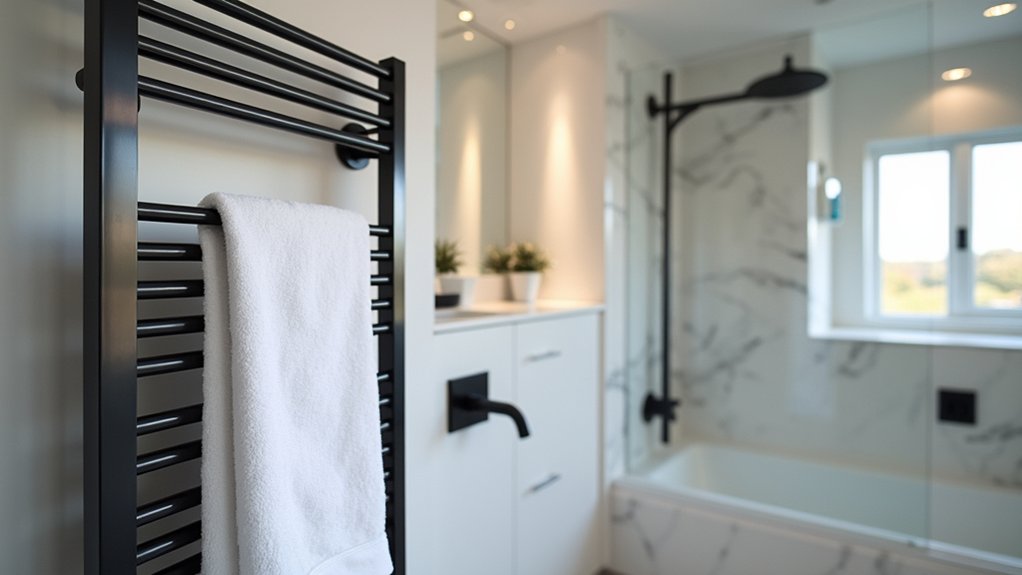
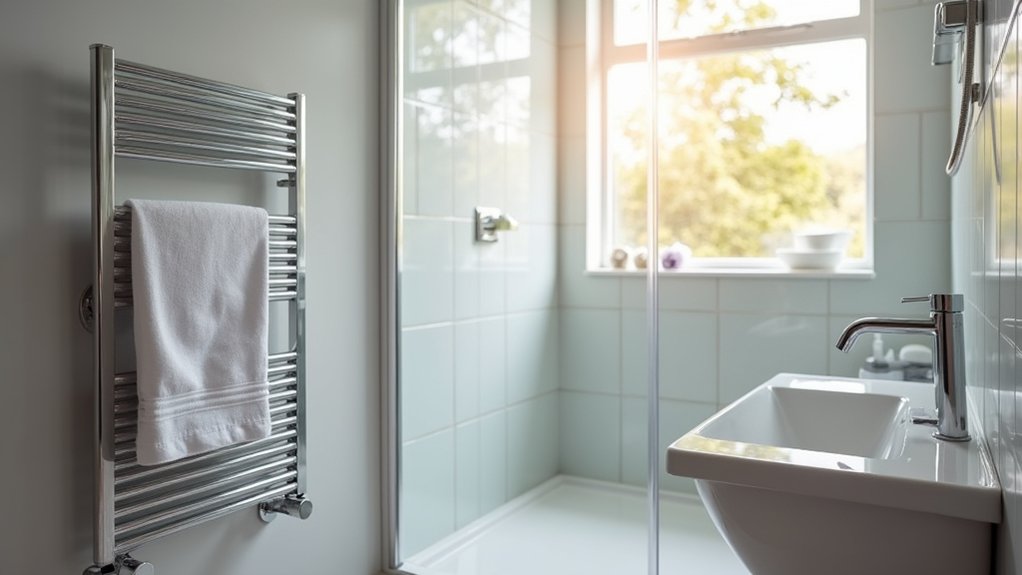
Heated towel rails changed the bathroom by combining practical drying with controlled space heating. During your refit, you can replace a bulky radiator with a vertical or ladder-style unit that uses wall space more efficiently. This change improves circulation, simplifies furniture placement, and gives you a cleaner layout without adding another heating appliance.
Modern designs offer thermostatic control, programmable timers, and electric, central-heating, or dual-fuel operation, so you can match output to your system and usage. You’ll also find finishes and materials suited to demanding bathroom conditions, including stainless steel, chrome, matt black coatings, and other luxury materials.
Select the rail’s heat output, dimensions, pipe connections, and electrical rating before installation. Correct sizing guarantees reliable room heating while preserving a balanced, integrated appearance throughout your refitted bathroom.
When remodeling your en-suite, installing bathroom towel radiators is an excellent way to keep your space warm while ensuring your linens dry quickly.
Keep Towels Warm, Dry and Ready
Keep towels warm, dry, and ready by choosing a rail with enough surface area and heat output for your household’s needs. Check the manufacturer’s wattage, towel capacity, and recommended bathroom size before installation.
A thermostatic model maintains consistent temperature without wasting electricity, while a timer lets you heat the rail around bathing routines.
Hang towels with gaps between layers so warm air can circulate and moisture can evaporate efficiently. This reduces damp smells and helps limit bacterial growth, particularly during colder months.
Choose stainless steel or a corrosion-resistant finish for reliable performance in humid conditions. You can also match the rail’s finish with taps and handles for clean Color coordination.
Pairing controlled warmth with Luxury textures, such as thick cotton towels, gives you a consistently comfortable, dry result after every shower.
Make Better Use of Bathroom Wall Space
Make better use of bathroom wall space by installing a vertical heated towel rail where floor-mounted storage would obstruct movement. You’ll keep towels accessible without reducing clearance around the basin, toilet, or shower entrance.
Select wall-mounted options with concealed fixings and a suitable electrical connection point. Then confirm that the wall can support the rail and loaded towels.
Position it beyond splash zones unless the product carries the required bathroom IP rating.
You can also combine the rail with storage solutions, such as slim shelves, recessed niches, or hooks fixed beside—not directly over—heated elements.
Maintain manufacturer-specified clearances to protect finishes and allow even heat distribution.
Route cables safely, use a qualified electrician where required, and seal wall penetrations to prevent moisture entering the substrate.
Choose the Right Heated Towel Rail Size
Once you’ve confirmed the rail’s wall position and electrical requirements, select a size that matches both your available space and heat output needs. Measure the clear wall area, including skirting, switches, doors, and nearby fittings, then compare those dimensions with the manufacturer’s height and width.
Choose a rail that leaves enough clearance for installation, ventilation, and comfortable access. For effective towel drying, check the stated wattage and consider how many towels you’ll hang simultaneously.
A compact rail suits a cloakroom or en-suite, while a wider, taller model provides greater capacity in a family bathroom. Space optimization matters, so count usable rungs rather than relying on overall dimensions alone.
Confirm each towel can hang without overlapping, allowing air to circulate and heat to reach the fabric evenly. Don’t oversize the rail for a narrow wall.
Compare Electric and Central-Heating Rails
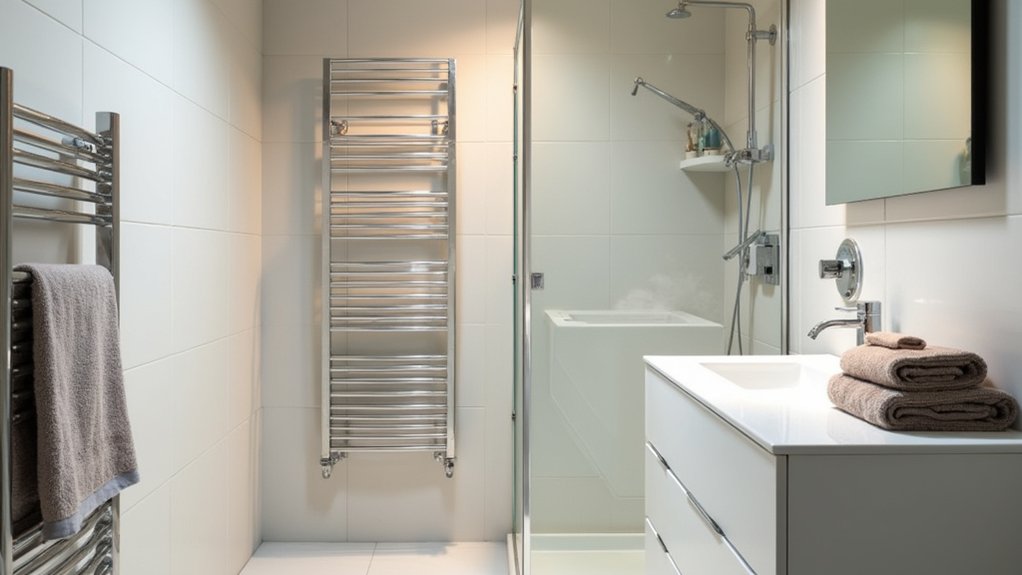
You’ll get independent operation and programmable heating with an electric rail, making it practical for summer use or bathrooms without central-heating access.
A central-heating rail can run efficiently with your existing boiler during scheduled heating periods.
Compare installation requirements, running costs, controls, and heat output before choosing.
Electric Rail Benefits
Electric heated towel rails give you independent, programmable warmth without relying on the central-heating system. You can set operating times with a timer or smart control, so towels dry after showers while the rest of your home stays unheated.
This zoning provides luxury comfort and can support energy savings when you limit runtime to genuine use.
Installation also offers greater flexibility. You don’t need to connect the rail to existing heating pipes, making it suitable for bathrooms with inaccessible pipework, extensions, or summer use.
A qualified electrician can position the rail where it works best, provided the circuit includes appropriate protection and complies with bathroom zoning requirements.
Choose the correct wattage for the rail’s size, then use a thermostat to maintain consistent surface temperature and avoid unnecessary electrical consumption during operation.
Central-Heating Rail Efficiency
Central-heating towel rails can be more economical when your boiler is already running, as they use existing hot-water circulation rather than drawing electricity directly. You’ll benefit most when the rail operates alongside your heating schedule, especially during colder months.
However, it won’t provide heat when the boiler and pump are off unless you add an electric element. That limits summer drying and independent temperature control.
Correct radiator placement also affects performance: install the rail where pipe runs remain short, airflow stays unobstructed, and towels won’t block surrounding surfaces. You’ll get better heat distribution when the rail has adequate clearance and isn’t hidden behind furniture or a door.
Compared with electric models, central-heating rails usually cost less to run but require plumbing alterations, system compatibility checks, and professional installation. Weigh running costs against control and flexibility.
Match the Finish to Your Bathroom Style
Choose the heated towel rail’s finish to complement your bathroom’s fittings, tiles, and overall style. For effective color coordination, compare the rail with taps, shower controls, cabinet handles, and tile tones.
Chrome suits contemporary, high-traffic bathrooms because its reflective surface is durable and easy to clean. Brushed steel or brushed nickel softens reflections and disguises fingerprints, making it practical for family use. Modern towel radiators now come in matte black and brushed brass finishes, making them a stylish focal point rather than just a functional appliance.
Matte black creates strong contrast against pale tiles, while brass or copper introduces warmth in traditional or industrial schemes.
Material selection also affects appearance and longevity: verify whether the finish is plated steel, stainless steel, or powder-coated metal, and check the manufacturer’s cleaning guidance.
Choose a consistent sheen across fixtures; mixing polished and satin surfaces can look deliberate, but random combinations may make your refit feel visually disjointed.
Plan Safe, Efficient Heated Towel Rail Installation
Before installation, you’ll need to confirm the circuit, isolation switch, and bathroom zone comply with current electrical regulations.
Position the rail where it heats towels effectively without obstructing fixtures, doors, or ventilation.
You’ll also need to allow safe clearances and use a qualified electrician for the electrical connection.
Check Electrical Safety
Check electrical safety before connecting a heated towel rail, because bathroom moisture increases the risk of electric shock. Have a qualified electrician assess the installation, especially if you’re replacing an existing radiator or adding a new supply.
Your electrical wiring must comply with current regulations, including suitable cable sizing, secure terminations, and appropriate zones for bathroom equipment. Confirm that the rail’s IP rating matches its intended wet-area application, and don’t install a model that lacks manufacturer-approved protection.
Guarantee circuit protection includes a correctly rated fuse or breaker and a 30 mA residual-current device (RCD). Isolate the circuit at the consumer unit before any work, then verify it’s dead with a calibrated tester.
After connection, the electrician should test continuity, insulation resistance, polarity, and RCD operation before commissioning the rail safely.
Position For Efficiency
Position the heated towel rail where it can warm towels without obstructing doors, drawers, windows, or ventilation, while keeping required clearances from baths, showers, and electrical equipment. Verify the proposed location against local electrical zones, manufacturer instructions, and building regulations before drilling.
Mount the rail at a practical height, allowing towels to hang freely without touching the floor or nearby surfaces. Place it near the shower or bath exit to reduce dripping across the room, but avoid direct spray that could increase corrosion or electrical risk.
A position near the room’s coldest wall can improve heat retention, provided insulation and fixings are suitable. Use vertical wall space for space optimization, and check that pipes, cables, and wall reinforcement won’t interfere with secure installation.
Confirm controls remain accessible after fitting.
Frequently Asked Questions
How Much Do Heated Towel Rails Typically Cost to Run Each Month?
You’ll typically pay £3–£12 monthly, depending on wattage, timer settings, electricity rates, and usage. Energy efficiency improves with thermostatic controls; Installation costs remain separate, covering electrical work, mounting, and commissioning.
Can Heated Towel Rails Help Prevent Mould and Unpleasant Bathroom Odours?
Yes, heated towel rails support Mould prevention by keeping towels dry and reducing humidity. They also improve Odour control, but you’ll still need ventilation, regular cleaning, and prompt leak repairs to prevent persistent moisture problems.
How Long Do Heated Towel Rails Usually Last Before Needing Replacement?
You’ll usually get 10–20 years from heated towel rails before replacement. Prioritise electric efficiency, check installation considerations, inspect wiring and thermostats regularly, and replace promptly if corrosion, leaks, or unreliable heating develops.
Are Heated Towel Rails Suitable for Bathrooms With Limited Ventilation?
Yes, you can use heated towel rails in bathrooms with ventilation challenges. Choose a suitably IP-rated model, install it safely, and don’t rely on it as alternative heating; improve extraction to control condensation effectively.
What Maintenance Do Heated Towel Rails Require Throughout the Year?
Each month, you’ll inspect wiring, mounts, controls, and seals; then the hidden issue appears. Dust regularly, check corrosion, tighten fittings, test safety switches, and bleed hydronic models. Follow installation tips and monitor energy efficiency year-round.
Conclusion
Upgrading to heated towel rails transformed your bathroom refit by solving problems you’d rather not notice: cold, damp towels, wasted wall space, and lingering moisture. Choose the correct size, heating system, finish, and controls, then have the rail installed safely and efficiently. You’ll gain faster drying, improved hygiene, and a cleaner layout—ironically, the smallest fixture may deliver the biggest upgrade. With thermostatic control and timers, you can enjoy everyday comfort without turning efficiency into an afterthought.