
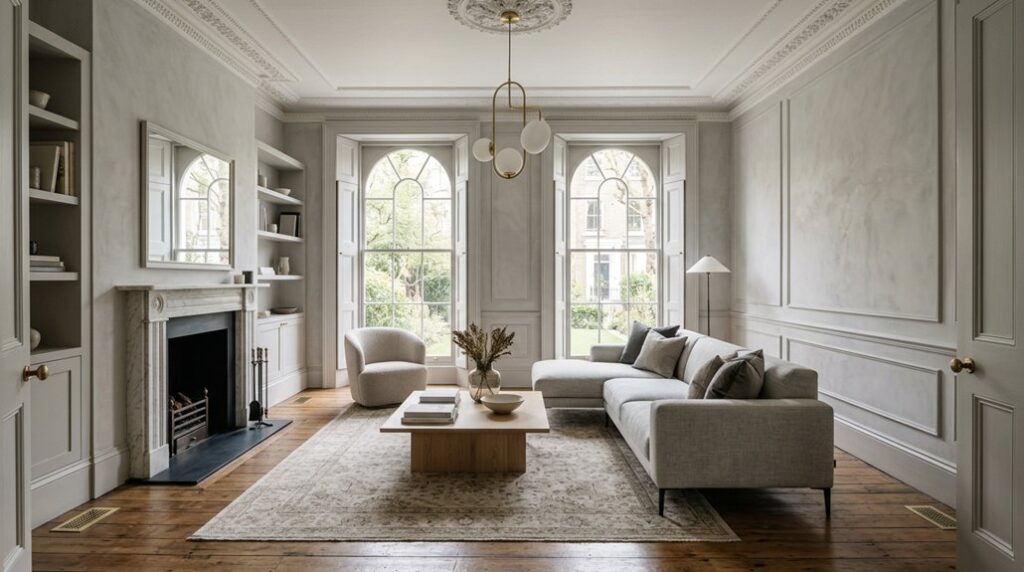
Restoring a Georgian townhouse means improving comfort without erasing the details that define its character. Start by surveying sash windows, fireplaces, cornices, floorboards, and historic joinery before planning any intervention. You’ll need compatible materials, reversible repairs, and discreet upgrades to heating, insulation, and services. Planning controls and skilled tradespeople also matter, particularly where listed features are involved. The key question is which modern improvements can remain effective without becoming visually dominant.
Key Takeaways
- Begin with measured drawings, photographs, condition surveys, and specialist investigations before planning restoration or upgrades.
- Identify, document, and repair significant Georgian features using compatible, breathable, and reversible materials wherever possible.
- Improve comfort discreetly through carefully routed services, secondary glazing, draught reduction, zoned heating, and breathable insulation.
- Retain later alterations with historical value while ensuring new work remains visually quiet and distinguishable from original fabric.
- Confirm permissions, use experienced conservation trades, obtain itemised quotations, phase construction, and maintain at least a 15% contingency.
Assess Your Georgian Townhouse First
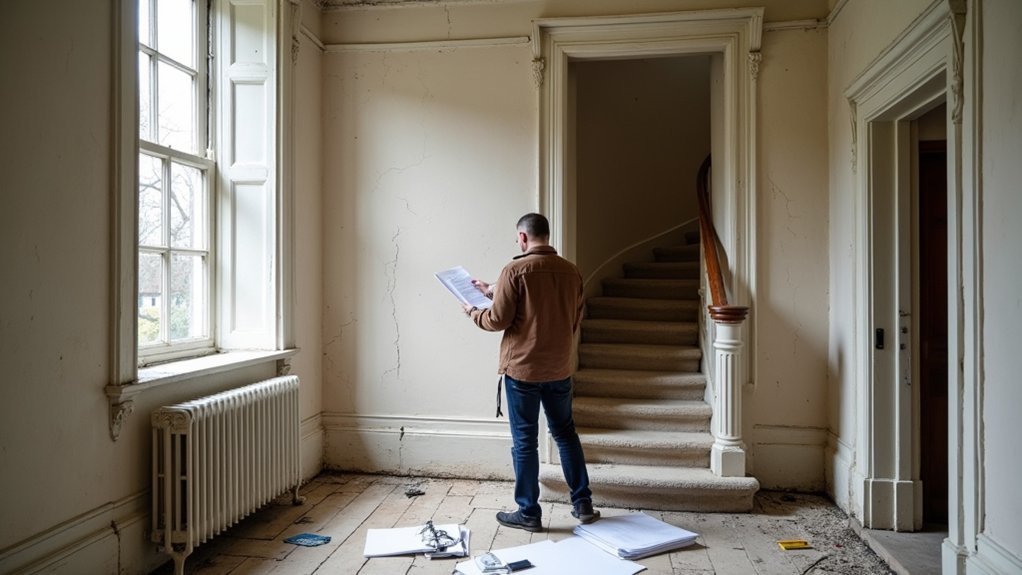
Before planning any work, assess your Georgian townhouse as a historic structure rather than a collection of rooms. Begin with measured drawings, dated photographs, and a written condition survey covering walls, floors, roof, services, moisture, and movement.
Record alterations by period, distinguishing original construction from later interventions without assuming newer work lacks value. Check the building’s listing status, conservation-area controls, title restrictions, and local authority guidance before developing proposals.
Commission specialists to investigate structural defects, damp sources, hazardous materials, and inefficient systems; don’t rely on surface appearance alone. Map circulation, daylight, ventilation, and current services so you can define realistic performance goals.
Establish a significance assessment that supports Historical authenticity while identifying where interior renovation may improve safety and comfort without compromising the townhouse’s architectural hierarchy, proportions, or historic character.
Preserve Original Features Worth Saving
Preserve original features that carry the townhouse’s architectural, technological, or social history, including staircases, panelled doors, shutters, cornices, skirtings, fireplaces, floorboards, ironmongery, and surviving service fittings. Their Historical significance strengthens the building’s identity and supports Architectural authenticity.
Inspect each element systematically. Record materials, construction methods, alterations, defects, and previous repairs before removing paint, lifting boards, or dismantling joinery.
Retain sound fabric wherever possible, and repair rather than replace it. Use compatible materials and reversible techniques: splice damaged timber, consolidate loose plaster, and match missing mouldings accurately without creating false age.
Keep later additions when they document the townhouse’s evolving use, unless they obscure particularly important work. Label and store detached components safely during construction. Photograph details, maintain a condition schedule, and consult a conservation specialist for structural movement, decayed timber, historic fireplaces, or unusual fittings.
Protect vulnerable features from dust, impact, and careless storage.
Upgrade Georgian Townhouse Comfort Discreetly
Once original features are documented and protected, improve comfort through upgrades that respect the townhouse’s historic fabric. Plan services around existing voids, cupboards, and secondary spaces, avoiding unnecessary chasing into lath, plaster, or masonry. Choose discreet controls, compact fittings, and reversible installations so future repairs remain possible.
You can improve acoustics with freestanding bookcases, lined curtains, and rugs, provided they don’t conceal damp, obstruct ventilation, or overload floors. Treat interior decoration as a conservation tool: select breathable paints, historically compatible colours, and finishes that distinguish new work without competing with surviving details.
Careful furniture selection supports comfort without damaging floors or joinery; use appropriately scaled pieces, protective pads, and felt glides. Coordinate every intervention with a conservation professional when significance or structural risk is uncertain.
Improve Energy Efficiency Without Losing Character
Improve energy efficiency by targeting draughts, uncontrolled heat loss, and inefficient services before considering fabric-altering work. Start with reversible measures: seal gaps around doors, repair sash windows, and fit discreet brush strips rather than replacing original frames. Use secondary glazing where appropriate, preserving existing glass, mouldings, and sightlines.
Assess historic insulation carefully. Breathable materials such as wood fibre or sheep’s wool can improve roof and floor performance, but avoid trapping moisture behind impermeable layers. Maintain ventilation, especially in kitchens and bathrooms, to control condensation and protect masonry and timber.
Choose modern heating that responds to the building’s fabric. Zoned controls, weather compensation, and correctly sized radiators can reduce consumption without chasing excessive temperatures. Insulate pipes in unheated spaces, balance the system, and monitor humidity and energy use.
Keep upgrades visually quiet, allowing cornices, fireplaces, shutters, and panelled doors to remain the focus.
Plan Permissions, Trades, and Restoration Costs

Before work begins, confirm which alterations need planning permission, listed-building consent, or conservation-area approval, since internal changes can be regulated as closely as external ones. Contact your local authority before removing partitions, replacing windows, altering staircases, or installing insulation.
Building permits and consent conditions may specify materials, methods, and recording requirements, so keep drawings, photographs, and approvals together.
Choose tradespeople experienced in historic buildings, and ask for references involving lime mortar, plaster, timber repairs, and sash windows.
A conservation architect or surveyor can distinguish repairable fabric from later additions and protect historical accuracy.
Obtain itemised quotations, allowing for surveys, specialist labour, scaffolding, contingencies, and VAT. Don’t accept the lowest price without checking competence.
Phase work logically, retain a contingency of at least 15 percent, and document every intervention for future maintenance and resale.
Frequently Asked Questions
How Can I Choose Period-Appropriate Colours for Georgian Townhouse Interiors?
Choose a historic palette by studying surviving paint layers, regional Georgian precedents, and architectural period. Test muted pigments beside existing features, then maintain color harmony through coordinated walls, trim, ceilings, and furnishings.
What Insurance Considerations Apply During a Georgian Townhouse Restoration?
You’ll need Historic building insurance covering listed-status requirements, specialist materials, and reinstatement costs. Confirm Restoration coverage includes structural works, contractor liability, theft, unoccupied periods, and damage to original features; notify insurers before alterations begin.
How Can I Minimise Disruption While Living in the Property During Renovations?
You’ll minimise disruption by phasing works, sealing active areas, and maintaining one habitable zone. Plan Temporary living arrangements, agree daily work hours, and use Noise mitigation strategies, including acoustic screens and low-vibration tools.
Which Modern Security Systems Work Discreetly in Georgian Homes?
Smart alarms protect; Wireless cameras observe. You’ll preserve Georgian character by choosing wireless, colour-matched devices, concealed wiring, contact sensors, and monitored smoke detection. Position cameras discreetly, avoid listed interiors, and integrate everything through one secure app.
How Should I Furnish Rooms to Complement Original Georgian Architectural Details?
Choose restrained furniture that preserves sightlines and highlights cornices, shutters, fireplaces, and proportions. Blend Victorian furniture with contemporary art selections, natural textiles, and historically sympathetic colours; avoid overcrowding, imitate original finishes, and maintain architectural hierarchy.
Conclusion
Restoring your Georgian townhouse demands patience, evidence-based decisions, and respect for its layered history. By evaluating the building first, repairing rather than replacing original features, and integrating services discreetly, you’ll gain modern comfort without erasing character. Improve efficiency through compatible, reversible measures, and secure the right permissions and skilled trades before work begins. Remember, “measure twice, cut once”: careful planning protects both your investment and the architectural integrity that makes the house distinctive.

