
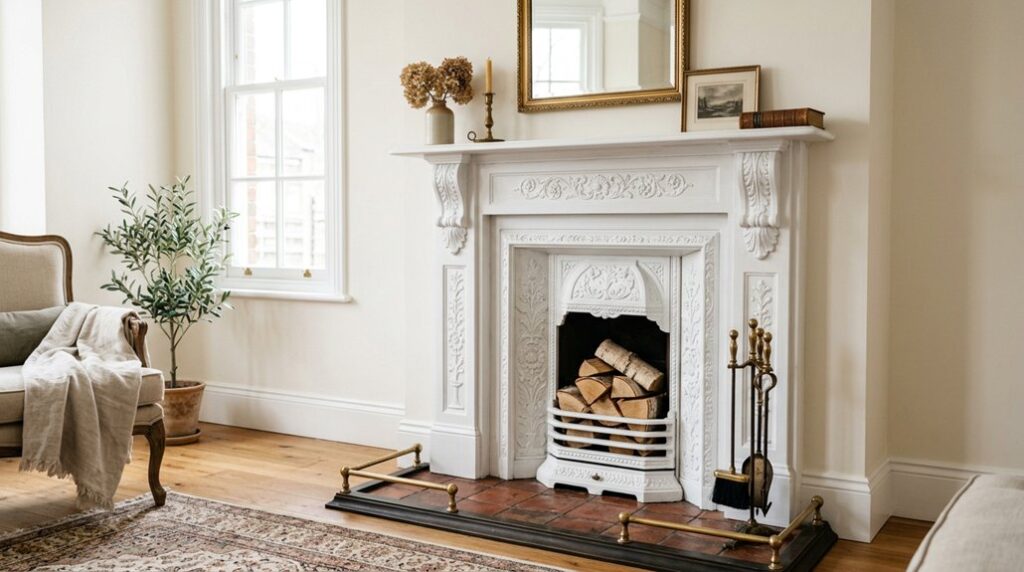
A well-presented period fireplace can contribute considerably to buyer appeal, while careful restoration often costs far less than replacement. Start by inspecting the surround, tiles, grate, and flue before spending money. Clean original surfaces gently, repair minor tile damage, and use affordable period-style accessories to restore character. You’ll also need to address safety with detectors, moisture-resistant finishes, and professional flue checks. These practical improvements protect the feature’s history and value—but hidden defects may change your priorities.
Key Takeaways
- Inspect and photograph the fireplace, recording cracks, loose tiles, dampness, missing details, and damaged mortar before repairs.
- Clean soot and dust gently with a soft brush, vacuum, and pH-neutral detergent, avoiding abrasive methods that reduce period character.
- Repair or replace damaged tiles using reclaimed or affordable reproduction Victorian tiles matched to the original pattern and glaze.
- Refresh the appearance with breathable, heat-resistant coatings, polished suitable metalwork, and minimal period-appropriate accessories from salvage sources.
- Improve safety and buyer appeal with a qualified flue inspection, carbon-monoxide alarm, chimney sweeping, and discreetly installed efficient heating controls.
Inspect Your Victorian Fireplace Before Spending
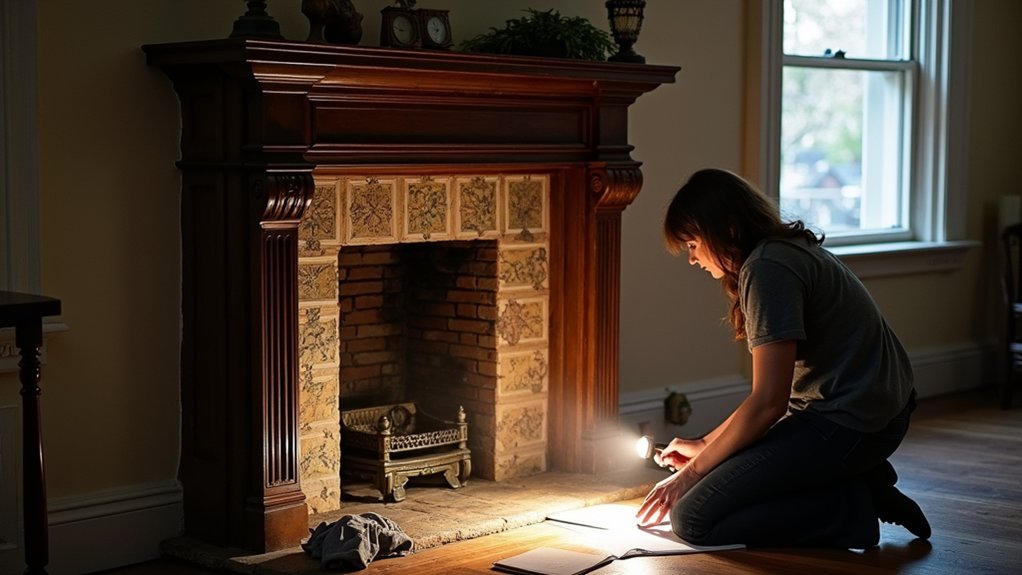
Before buying materials, inspect the fireplace’s structure, finish, and flue to identify what actually needs repair. Check the mantel, surround, hearth, and breast for cracks, movement, dampness, and failed joints. Press gently around loose areas; hollow sounds can indicate detached plaster or tiles.
Examine mortar condition, brick stability, and any corrosion around a cast-iron insert. Use a torch and mirror to view the flue opening, but don’t send smoke or tools into it before a qualified sweep assesses safety.
Photograph every defect and measure missing tiles, trim, and damaged sections. Record original colors, profiles, and construction details to support Historical accuracy.
Then prioritize hazards and structural faults over cosmetic work. This inspection guides Material selection, prevents unnecessary purchases, and helps you compare repair costs with replacement options.
Clean Original Features Without Damaging Them
Once you’ve recorded the defects, clean the original surfaces before deciding which repairs they need. Wear gloves, eye protection, and a suitable mask, then vacuum loose soot and dust with a soft brush attachment.
Don’t scrape, sand, pressure-wash, or use wire brushes; these methods can remove aged finishes, maker’s marks, and delicate glaze.
Test a mild, pH-neutral detergent on an inconspicuous area, applying it sparingly with a barely damp cotton cloth. Blot rather than saturate, and dry each section immediately to prevent moisture entering joints or porous masonry.
For brass, identify whether the surface is lacquered before polishing; aggressive compounds may erase patina.
Photograph every stage to support Historical accuracy and Material preservation.
If deposits resist gentle cleaning, stop and consult a conservation specialist instead of escalating the treatment.
Repair Tiles and Refresh the Fireplace Surround
Repair loose or cracked tiles only after the surround is clean, dry, and fully documented. Photograph patterns, mark each tile’s position, and remove damaged pieces carefully with a narrow chisel. Scrape away failed adhesive without widening cracks, then bed replacement tiles in a compatible, heat-resistant adhesive.
Match Victorian dimensions, glaze, and color; reclaimed tiles may require gentle cleaning rather than repainting.
Before repainting the surround, fill minor chips with suitable repair compound and sand only repaired areas. Use a breathable, heat-resistant coating, applied in thin, even coats after masking the tilework. Don’t cover maker’s marks or original decorative detail.
Check that any Mantel customization preserves clearances around the opening. If you’re planning Firebox installation, complete its measurements and safety checks first, because altered depths or ventilation requirements can affect surround repairs.
Add Period-Inspired Accessories on a Budget
Choose a few inexpensive, period-appropriate accessories—such as a brass companion set, cast-iron fender, ceramic tiles, or a framed reproduction print—to reinforce the Victorian character without overcrowding the fireplace.
Measure the opening and hearth first, then select pieces that match their scale.
A narrow brass poker, shovel, and tongs set adds function and period character, while a dark cast-iron fender defines the hearth edge.
Search architectural salvage yards, charity shops, and online marketplaces for affordable originals; check brass joints, iron stability, and tile condition before buying.
Reproduction tiles can supply Victorian pattern and color where originals cost too much.
Use decorative accents sparingly, keeping finishes coordinated rather than identical.
Historical authenticity improves when you choose historically plausible materials, shapes, and motifs instead of modern ornaments styled to look antique.
Protect Your Restoration and Boost Property Value
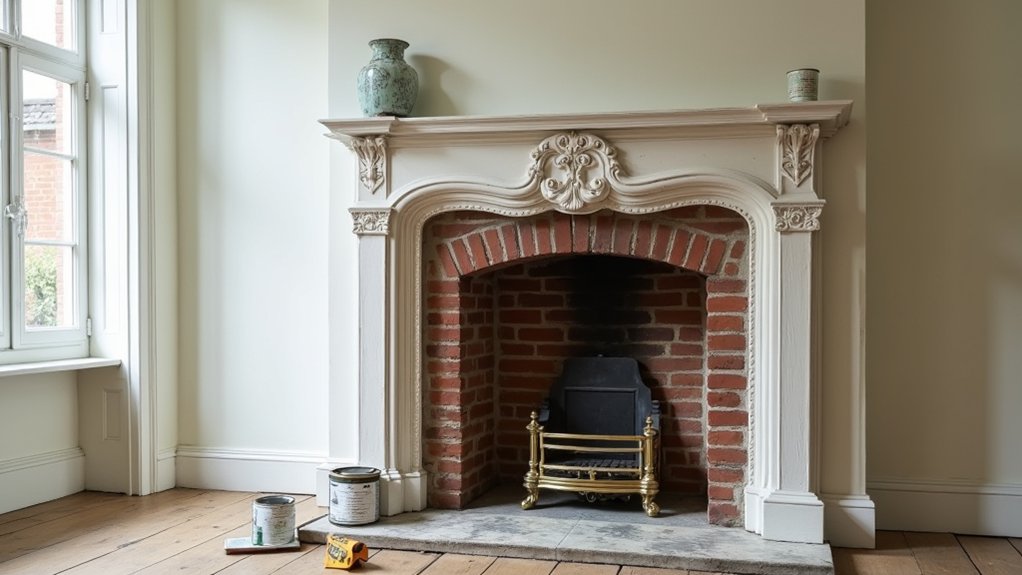
After adding period-inspired accessories, protect the restored fireplace with measures that preserve its materials and appeal to future buyers. Follow these practical safeguards:
- Fit a properly sealed, stainless-steel flue liner to improve ventilation and protect masonry.
- Install a carbon-monoxide alarm nearby, then schedule annual chimney inspections and sweeping.
- Use a nonabrasive wax on timber mantels and avoid moisture-trapping paint on brick.
- Place a discreet, heat-resistant hearth guard before operating an open fire.
- Photograph original features and retain repair records to document historical accuracy.
Test the damper, check pointing for cracks, and repair leaks promptly. Don’t burn unseasoned wood; excessive moisture and tar accelerate deterioration.
For modern integration, conceal compliant wiring, efficient inserts, or thermostatic controls without altering the mantel or surround. These low-cost measures reduce maintenance, improve safety, and reassure buyers that your Victorian fireplace remains authentic, functional, and carefully preserved.
Clean soot gently after cooling, never while surfaces are hot.
Frequently Asked Questions
Can I Restore a Victorian Fireplace if My Property Is Listed?
Yes, you can restore a listed Victorian fireplace, but you’ll typically need listed-building consent first. Consult your conservation officer, document existing features, prioritise Historical accuracy, and avoid DIY restoration that removes fabric or uses incompatible materials.
How Do I Identify Whether Fireplace Materials Contain Asbestos?
You can’t identify asbestos safely by sight alone. Arrange professional Asbestos testing and Material identification; don’t drill, scrape, or disturb dusty tiles, mortar, insulation, or cement. A licensed surveyor should sample materials.
What Safety Regulations Apply When Restoring a Victorian Fireplace?
You must follow local building codes, fire safety rules, and heritage requirements. Check structural integrity, obtain permits, control dust, test suspected asbestos, use licensed specialists, and install compliant liners, hearths, ventilation, and alarms.
Can I Use a Gas or Electric Fire in an Original Victorian Surround?
Yes, you can use modern alternatives in an original Victorian surround, but you’ll need a certified installer, suitable liners, ventilation, and electrical protection. Check structural clearances, local regulations, and Energy efficiency before choosing gas or electric.
When Should I Hire a Professional Fireplace Restoration Specialist?
Hire a professional fireplace restoration specialist when you find structural cracks, damaged flues, unsafe masonry, gas connections, or heritage details requiring conservation. You can handle DIY painting and Fireplace cleaning only after inspection confirms safety.
Conclusion
Restoring your Victorian fireplace doesn’t require a large budget. Inspect it first, clean original surfaces gently, repair tiles with compatible adhesive, and add affordable period-style accessories. As it happens, the same small improvements that protect historic details—such as moisture-resistant paint, a sealed flue liner, and working carbon monoxide detectors—can also reassure buyers and increase value. By preserving character while improving safety, you’ll create a functional focal point that looks authentic, performs reliably, and strengthens your property’s appeal.