
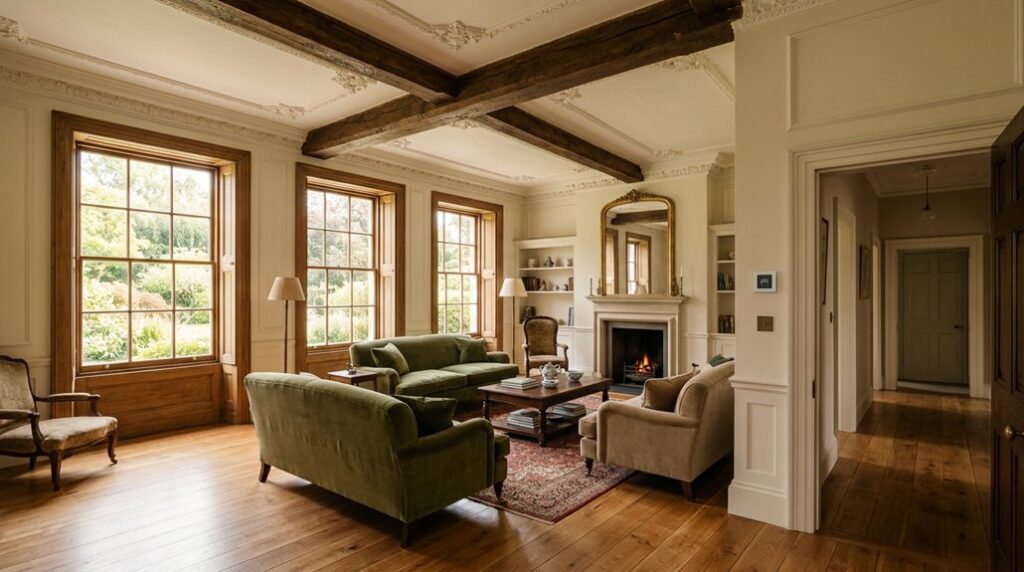
In a period home, your heating system can either preserve the architecture or compete with it. We recommended underfloor heating because it keeps walls clear of radiators, protects cornices and paneling, and delivers consistent warmth across each room. You’ll also gain improved zoning, fewer cold spots, and compatibility with efficient modern heat sources. However, older floors create technical constraints, and the right system depends on construction, insulation, and available floor depth.
Key Takeaways
- Underfloor heating preserves cornices, panelling, shutters, and skirting boards without introducing visually intrusive radiators.
- Its broad, low-temperature heat distribution provides consistent comfort with fewer cold spots and draughts.
- Hydronic systems work efficiently with heat pumps and condensing boilers, reducing energy use during continuous heating.
- Zoned thermostats enable precise room-by-room control, including discreet heating in bedrooms and hallways.
- Careful assessment of floors, joists, insulation, moisture, and build-up ensures compatibility with the period property.
Why Underfloor Heating Suits Period Homes

Underfloor heating suits period homes because it delivers consistent, low-temperature heat without covering original walls, fireplaces, or architectural details with radiators. You can preserve cornices, panelling, shutters, and skirting boards while keeping valuable floor and wall areas visually clear.
For Historic preservation, choose a system that matches the building’s structure and moisture behaviour. Hydronic pipes typically work well beneath a compatible screed or carefully prepared floor buildup, while electric mats can suit smaller rooms and targeted areas.
Before installation, you’ll need to check joist condition, floor levels, insulation, ventilation, and finished-floor compatibility. Accurate heat-loss calculations help you specify pipe spacing, manifold capacity, and controls without disturbing sensitive fabric.
This approach supports aesthetic integration: discreet thermostats, concealed distribution, and carefully selected finishes let the original character remain dominant.
How Underfloor Heating Compares With Radiators
Once you’ve confirmed that underfloor heating suits the building’s structure and finishes, compare its performance with radiators before choosing a system.
Underfloor circuits distribute heat across a large surface, so you can run water at lower temperatures than radiator systems typically require. That difference can improve energy efficiency, particularly with a heat pump or modern condensing boiler.
Radiators respond faster, however, making them useful in rooms you heat intermittently.
Underfloor heating stores heat within the floor, so you’ll need accurate design calculations, insulation, and reliable zoning to prevent wasted output.
Smart thermostats can control either system, but underfloor heating benefits especially from weather compensation and programmed warm-up periods.
Compare installation depth, floor coverings, heat-loss calculations, and access for future repairs before selecting the most practical option for your renovation.
Where Underfloor Heating Improves Comfort
You’ll usually notice the greatest comfort improvement in rooms where occupants spend time barefoot or sit close to the floor, such as bathrooms, kitchens, and living areas. Underfloor heating distributes warmth across the entire floor, reducing cold patches and the pronounced hot spots you can get above radiators.
You’ll feel more consistent temperatures at ankle level, while lower air movement can limit draughts and reduce dust circulation. Temperature control also becomes more precise when you divide the system into zones, allowing you to warm occupied rooms without overheating unused spaces.
That zoning supports Energy efficiency, particularly when you pair it with smart scheduling and suitable floor finishes. In bedrooms and hallways, the benefit feels subtler, but steady radiant warmth can still improve comfort without occupying wall space or restricting furniture placement.
What Installation Requires in Older Properties
Older properties often need more preparation before underfloor heating can be installed, particularly where floors are uneven, damp, suspended, or lack sufficient insulation. You’ll need a survey to identify structural limits, floor levels, moisture risks, and historic insulation that may require upgrading.
- Check joist condition and ventilation beneath suspended floors.
- Resolve plumbing challenges before covering pipework.
- Repair damp sources and install appropriate membranes.
- Level substrates to prevent uneven heat distribution.
- Specify insulation thickness, controls, and floor finishes together.
You may need to lift boards, excavate solid floors, or alter thresholds and doors. A low-profile electric system can suit restricted build-up heights, while water-based pipework usually demands deeper construction and manifold access.
Coordinate electricians, plumbers, and flooring contractors before work starts, then pressure-test wet circuits and photograph routes for future maintenance. Protect original features by agreeing reversible details where possible.
When Underfloor Heating Is the Better Choice
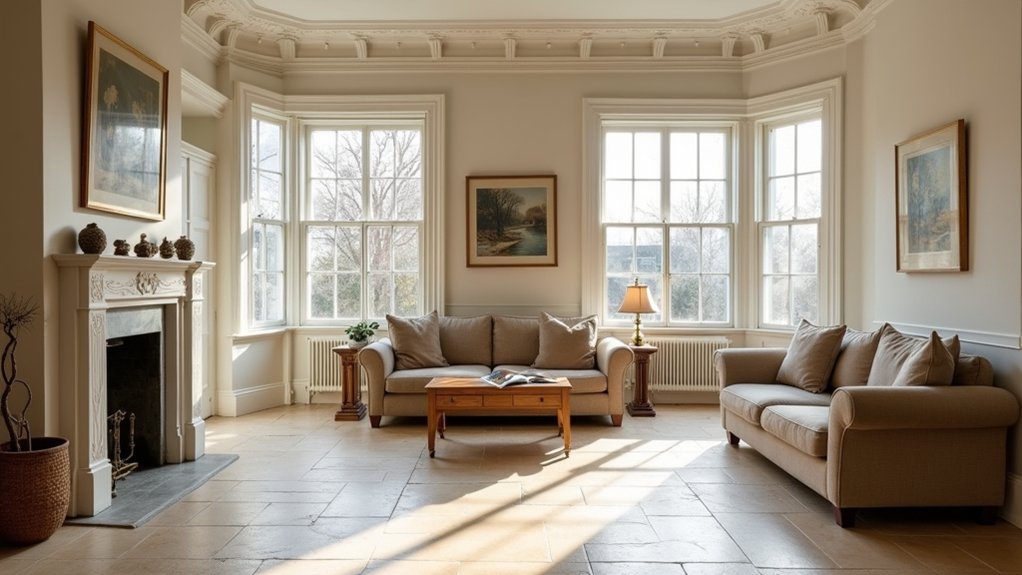
Underfloor heating is often the better choice when you want even, low-temperature heat, clear wall space, and improved comfort across large or open-plan rooms. You’ll benefit most where insulation, floor buildup, and heat-loss calculations support efficient operation.
Water-based systems pair well with heat pumps because they deliver useful output at lower flow temperatures, improving Modern efficiency. They also avoid hot and cold zones common with radiators, while freeing wall space for furniture, artwork, or built-in storage.
In a period renovation, you should confirm floor depth, insulation detailing, moisture protection, and finished-floor compatibility before choosing the system.
Electric mats suit smaller rooms or targeted upgrades, but running costs can be higher. The result combines reliable comfort with Aesthetic appeal, provided you commission controls, zoning, and commissioning correctly.
Frequently Asked Questions
How Much Does Underfloor Heating Cost to Run?
You’ll typically pay £0.10–£0.30 per hour per square metre, depending on tariffs, insulation, controls, and system type. Energy efficiency reduces consumption, while Installation costs affect overall value. Compare usage carefully.
Can Underfloor Heating Be Controlled Remotely?
Yes, you can control underfloor heating remotely through smartphone apps linked to Smart thermostats. You’ll adjust schedules, monitor temperatures, and manage zones remotely, improving Energy efficiency while preventing unnecessary heating during empty periods.
What Maintenance Does Underfloor Heating Require?
You’ll need little maintenance: inspect controls annually, test sensors, and bleed any manifold air. With 90%+ system efficiency, Thermal efficiency improves; Aesthetic integration remains intact because concealed pipes require no repainting or dusting.
How Long Does Underfloor Heating Typically Last?
Underfloor heating typically lasts 25–50 years, depending on system type, installation quality, and maintenance. You’ll maximize energy efficiency by addressing installation challenges early and testing controls, insulation, pumps, and thermostats regularly throughout operation.
Is Underfloor Heating Safe for Children and Pets?
Yes, you’ll find underfloor heating safe for children and pets when installed correctly. Child safety improves without hot radiator surfaces; Pet comfort benefits from even warmth. Use thermostatic controls and prevent cable damage.
Conclusion
Ultimately, underfloor heating lets you modernise comfort without allowing bulky radiators to dominate your period home. Its low-temperature warmth rises like a gentle tide, spreading evenly across rooms while preserving cornices, panelling, and carefully restored walls. Although installation demands detailed surveys, insulation checks, and sensitive floor planning, the result is discreet, zoned, and efficient heating. If you’re protecting historic character while improving everyday performance, underfloor heating provides a practical foundation for the renovation’s next chapter. What we really like is UFH adds warmth but without being visible, thus ensuring period properties keep their original feel.

