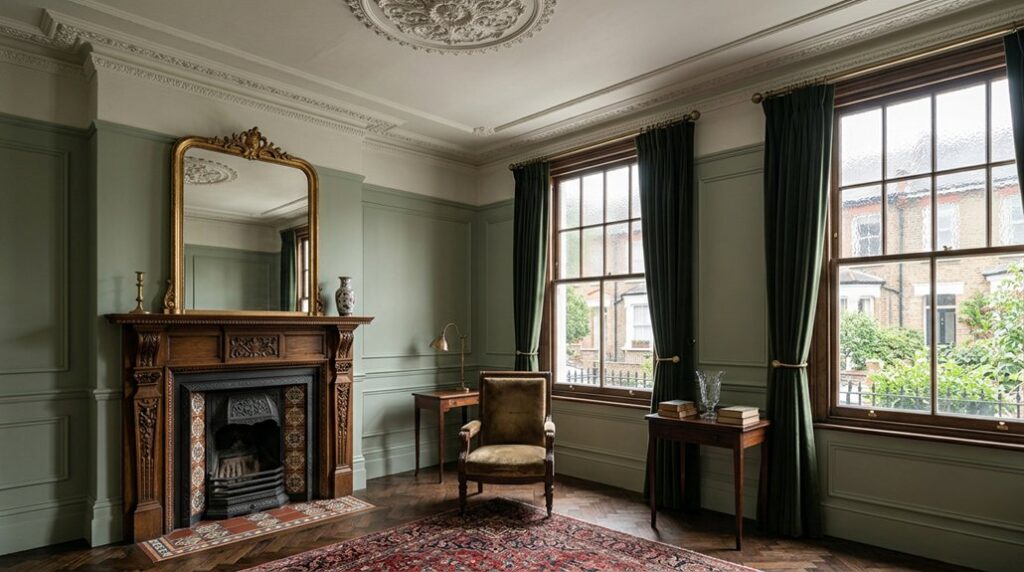
A Victorian home’s original features act like its architectural fingerprints, revealing how carefully it has survived London’s changing tastes. As you assess a property, start with three details: smoothly operating sash windows, sharply defined cornices with ceiling roses, and intact fireplaces with period surrounds. Check joinery, plasterwork, balance weights, and signs of replacement rather than relying on appearance alone. These elements can shape both character and value—but knowing which flaws matter most requires closer inspection.
Key Takeaways
- Original fireplaces with intact cast-iron inserts, tiled panels, proportionate mantels, and sound hearths strongly attract London buyers.
- Well-preserved sash windows signal authenticity when their timber frames, pulley details, meeting rails, and glass remain intact.
- Decorative cornicing and ceiling roses add value when profiles are crisp, proportionate, and free from concealed damage.
- Buyers also inspect original floorboards, doors, skirting, and architraves for consistent materials, tight joints, and authentic wear.
- Discreet improvements, documented repairs, and functional features increase appeal without compromising the home’s Victorian character.
Victorian Fireplaces That Anchor the Room
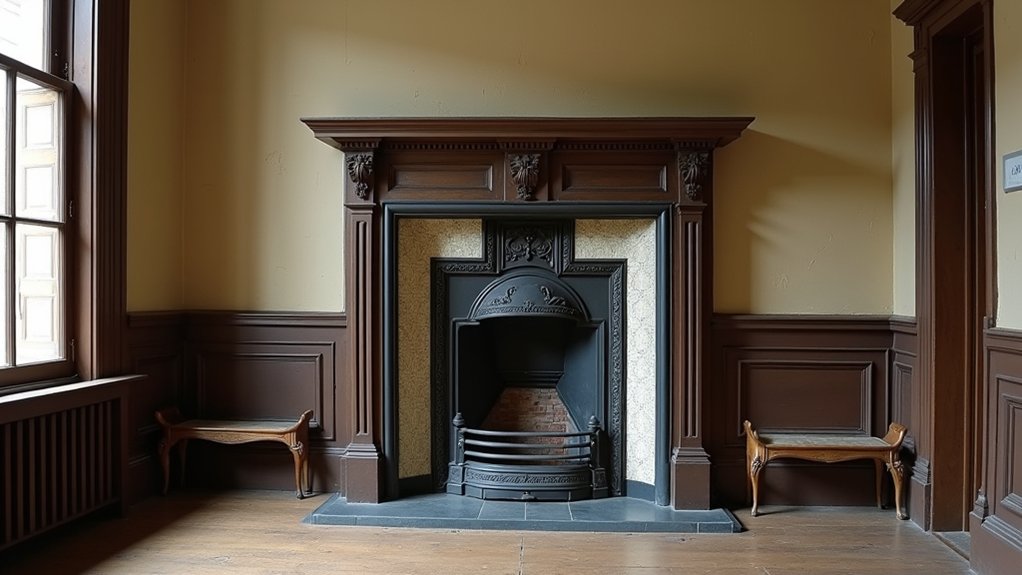
Victorian fireplaces anchor a room by combining architectural scale with practical detail, so London buyers often inspect the original surround, cast-iron insert, tiled panels, mantel, and hearth for period authenticity.
You’ll notice Victorian craftsmanship in crisp mouldings, consistent tile alignment, cast detailing, and carefully proportioned components.
Check whether the surround sits square, the insert remains complete, and the hearth shows appropriate material rather than a modern replacement.
Examine joints for movement, cracks, damp staining, soot deposits, and poorly concealed wiring.
A blocked flue isn’t automatically a defect, but you should request a qualified inspection before lighting it.
Fireplace restoration can preserve historic fabric while improving safety: specialists may repair tiles, stabilise masonry, line the flue, and replace missing elements with accurate replicas.
Don’t overlook paint layers; they can reveal alterations, repairs, or original decorative schemes.
Original Sash Windows Buyers Notice First
Original sash windows are among the first details London buyers assess because their proportions, glazing bars, timber profiles, and operating hardware can reveal whether a home retains its period fabric. Check whether the upper and lower sashes slide smoothly, close squarely, and remain balanced on their cords or modern spring mechanisms.
Examine meeting rails, putty lines, horn details, mouldings, and surviving cylinder glass for credible Victorian construction. These architectural details carry historical significance, while uneven replacements, oversized panes, or poorly fitted uPVC frames can weaken authenticity and performance.
Look for draught-proofing that preserves the original box frame, staff beads, and pulley pockets rather than concealing them. You should also inspect sill condition, timber decay, paint buildup, and condensation risk before budgeting for careful repair, secondary glazing, or discreet upgrades.
Decorative Cornicing and Ceiling Roses
Decorative cornicing and ceiling roses help buyers judge a Victorian room’s proportions, workmanship, and surviving period character. As you view a property, study the cornice’s profile: stepped mouldings, leaf motifs, and crisp shadow lines can indicate the intended architectural scale.
Ornate plasterwork should sit consistently along each wall, with clean mitred corners rather than abrupt joins. Look upward at the ceiling rose’s diameter and placement. A central, proportionate design can anchor the room around its original light fitting, while smaller rooms often use simpler decorative ceiling details.
Check whether mouldings segue neatly around chimney breasts and alcoves, where alterations become visible. Don’t confuse painted-over detail with damage; layered finishes may conceal sharp relief.
These features can also guide sympathetic lighting, repainting, and future restoration decisions.
How to Spot Well-Preserved Period Features?
To spot well-preserved period features, assess whether materials, proportions, and detailing remain consistent across the room rather than focusing on one attractive element.
Examine timber joinery for crisp mouldings, tight joints, original tool marks, and compatible patina.
Check plaster cornices and roses for sharp profiles, stable surfaces, and repairs that follow the existing pattern rather than obscuring it.
Original floorboards should show consistent widths, hand-finished edges, and age-related wear without excessive sanding.
Inspect fireplaces, skirting, doors, and architraves for matching dimensions and uninterrupted alignment.
Use a torch to reveal filler, modern screws, resin patches, or abrupt colour changes.
Look for damp, movement, or insect damage before assuming deterioration indicates poor maintenance.
For reliable Architectural restoration, compare details with neighbouring properties and consult specialists who can verify Historical authenticity.
Document every alteration before cleaning or repair begins.
Which Victorian Features Add the Most Value?
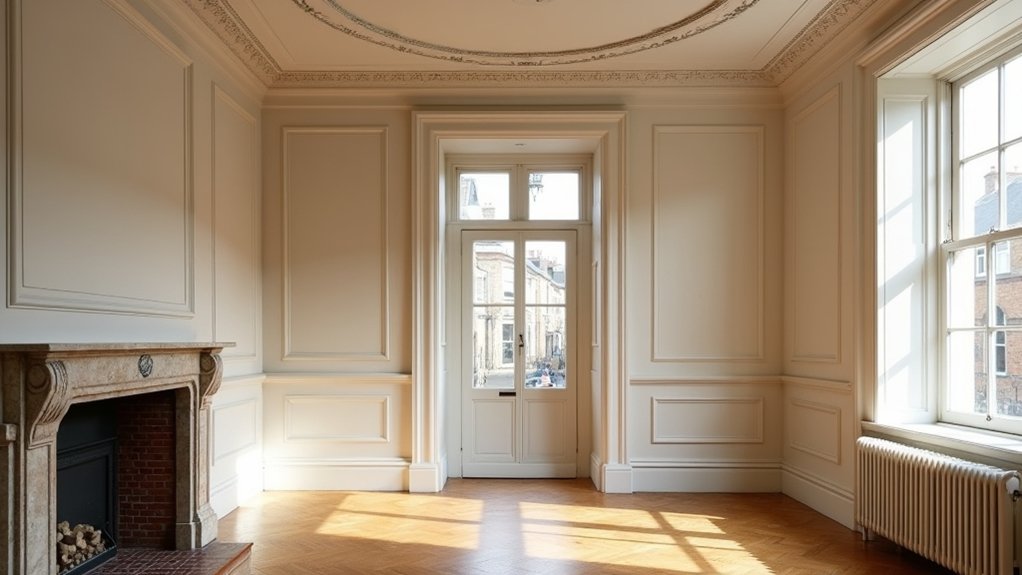
Well-preserved original features that buyers can verify typically add the most value, especially fireplaces, ceiling cornices, ceiling roses, timber sash windows, panelled doors, and geometric encaustic-tile floors.
You’ll gain strongest appeal when these elements retain authentic materials, correct proportions, and documented repairs rather than decorative replicas. Functional sash windows can command a premium if you’ve upgraded them discreetly with draught seals, secondary glazing, or repaired weights.
Likewise, a serviceable fireplace and intact encaustic flooring can reinforce a room’s period character without compromising everyday use.
Assess restoration costs before you value each feature: listed-building consent, specialist joinery, and handmade tiles can quickly exceed expectations.
Modern adaptations should remain reversible and visually quiet. Buyers may discount features requiring structural work, damp treatment, or extensive replacement.
Obtain conservation advice, invoices, and maintenance records so you can demonstrate condition, authenticity, and manageable future expenditure.
Frequently Asked Questions
What Are the Typical Maintenance Costs of Owning a Victorian Home?
You’ll typically budget £2,000–£5,000 annually for routine Victorian-home maintenance, plus larger repairs. Inspect masonry, roofing, sash windows, plumbing, and electrics; refresh your Victorian interior and allow extra for garden landscaping, damp treatment, and specialist conservation work.
Do Victorian Homes Usually Have Better Insulation Than Modern Properties?
You’ll usually find Victorian insulation weaker than modern properties’ standards, despite thick walls symbolising enduring shelter. Modern heating systems, airtightness, loft insulation, glazing, and draught-proofing typically deliver superior energy efficiency, comfort, and lower bills.
Are Victorian Properties More Expensive to Insure?
Yes, you’ll often pay more to insure Victorian properties because their Historical significance and Architectural details require specialist repairs, while older wiring, roofs, plumbing, and listed status can increase premiums, exclusions, and maintenance-related claims.
What Planning Permissions Apply to Renovating a Victorian House?
You’ll need planning permission for extensions, major alterations, or protected façades; you’ll need listed-building consent for listed structures. Check local conservation rules, assess renovation permits, and review potential historic restrictions before starting work.
How Can Buyers Check for Damp and Structural Issues in Victorian Homes?
You should arrange Damp detection with moisture meters, inspect gutters, roofs, basements, and timbers, then commission a Structural assessment. Check cracking, bulging walls, settlement, drainage, and ventilation; request repair histories and specialist reports.
Conclusion
When you assess a Victorian home, inspect more than surface charm. Test each sash for smooth travel, check glazing bars and pulleys, examine cornices and ceiling roses for intact detail, and verify fireplaces retain original surrounds, grates, and proportions. Why settle for decorative substitutes when authentic craftsmanship can strengthen both character and value? Prioritise features that are repairable, properly maintained, and consistent across the room. A careful inspection helps you buy period integrity—not merely a convincing imitation.