
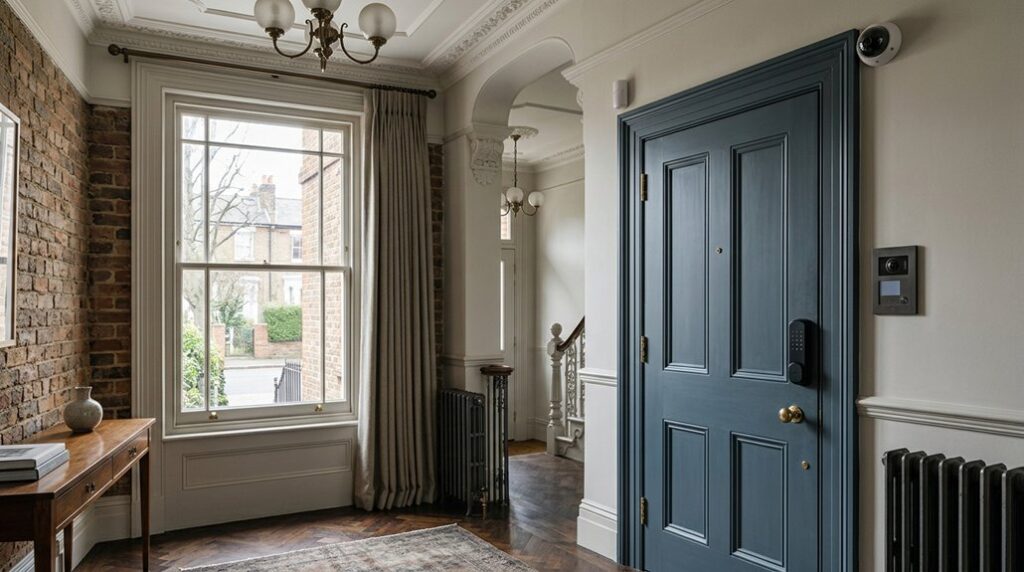
If you want Victorian character without leaving your security to chance, you’ll need upgrades that work quietly in the background. Reinforced doors, multi-point locks, protected windows, controlled communal entry, CCTV, video doorbells, and smart monitoring now influence London buyers’ decisions. You should also consider lighting, tamper-resistant hardware, and reversible installation methods, while checking lease, freeholder, and conservation requirements. Get the balance wrong, however, and a well-intended improvement could undermine both approval and resale value.
Key Takeaways
- British Standard Kitemarked locks, reinforced door frames, and multi-point systems reassure buyers about entry-door security.
- Upgraded sash-window locks, restrictors, and laminated glazing protect vulnerable Victorian windows without compromising period character.
- Secure communal entrances should include controlled access, self-closing doors, intercoms, and effective anti-tailgating sightlines.
- Professionally positioned cameras, video doorbells, and warm-white motion lighting improve visibility while respecting privacy and conservation restrictions.
- Buyers value well-maintained systems with access logs, cancelled credentials, firmware updates, backup power, and documented installation approvals.
Why Security Matters in Victorian Conversions
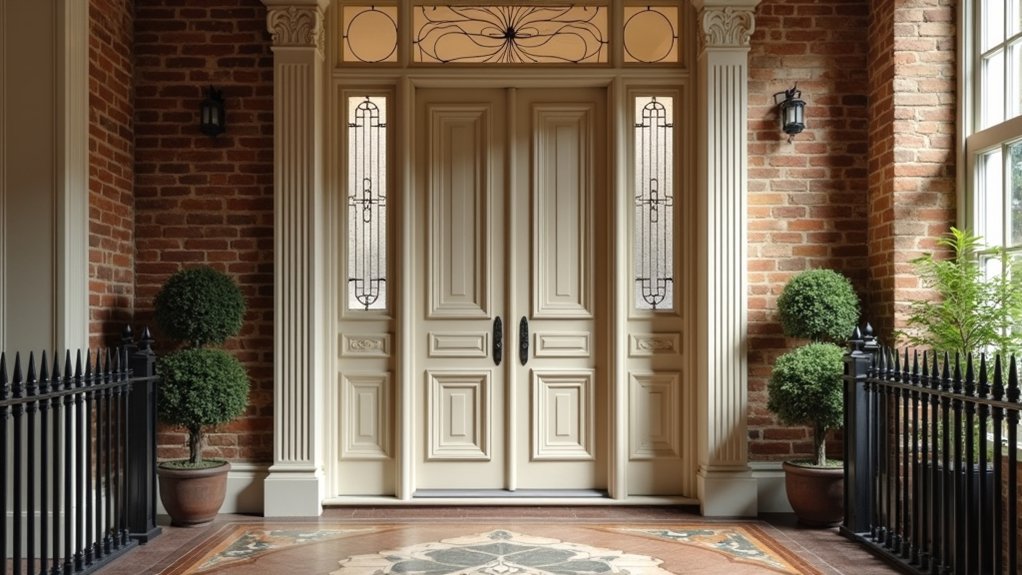
Victorian conversions combine ageing masonry, timber floors, shared entrances, and modern access points, creating security risks that standard flat measures may not address. As a buyer, you should assess how original construction affects compartmentation, sightlines, fire separation, and maintenance responsibility.
Communal circulation can allow unknown visitors to approach private dwellings, while altered layouts may leave weak boundaries between residents and public areas. You’ll also need to examine whether alarms, lighting, and access controls can integrate without damaging fabric or breaching conservation requirements.
Historical preservation may restrict drilling, cabling, or replacement work, so plan solutions with the building’s character in mind. Aesthetic considerations matter too: poorly selected equipment can reduce appeal and future value.
A documented risk assessment helps you prioritise proportionate improvements, clarify landlord obligations, and protect residents without compromising architectural significance or safety.
Upgrade Front Doors and Window Locks
You’ll strengthen your Victorian conversion by fitting reinforced front-door locks rated to current security standards.
Add a multi-point locking system to distribute force across the frame.
Then upgrade window locks with keyed, restrictor, or locking-handle mechanisms suited to each opening.
Reinforced Front Door Locks
A reinforced front door lock is one of the first upgrades London buyers assess in Victorian conversions, where older timber doors and shared entrances may offer limited resistance to forced entry. You should choose a British Standard Kitemarked cylinder, a hardened escutcheon, and a correctly fitted mortice lock.
Then inspect the door frame for splitting, loose keeps, or short fixing screws. A locksmith can anchor the keep into structural timber or masonry, improving resistance without replacing the entire door.
Check that the lock operates smoothly, aligns with the strike plate, and remains usable during evacuation. For listed buildings, coordinate changes with conservation requirements: Historical preservation matters, but aesthetic integration matters too.
Match hardware finishes and profiles to existing joinery, while retaining discreet, independently tested protection. Don’t overlook hinges, letter plates, and glazing near the lock.
Multi-Point Locking Systems
When upgrading a Victorian conversion, consider a multi-point locking system that secures the door or window at several points along its frame rather than relying on one central latch. You’ll distribute force more evenly, reduce frame movement, and make levering considerably more challenging.
For a replacement front door, specify a tested multipoint gearbox with hook bolts, deadbolts, and a compatible keep, installed into a properly aligned frame. Check that the cylinder meets current security standards and that the handle, escutcheon, and fixing screws resist tampering.
On traditional sash windows, specialist sash lock mechanisms can preserve the original appearance while adding dependable engagement at the meeting rails. Measure clearances carefully before ordering hardware.
You’ll also need a qualified installer to avoid binding, excessive compression, or damage to fragile Victorian joinery.
Secure Window Lock Upgrades
Secure window lock upgrades should match the window’s construction, opening method, and existing frame condition. Start by checking timber, uPVC, or metal frames for movement, decay, distortion, and failed fixings.
Your installer should select tested hardware that resists levering without compromising historic aesthetics or window frame integrity.
- Fit key-operated sash locks to vulnerable Victorian sash windows, using recessed keep plates where possible.
- Add discreet casement handles with internal locking points, ensuring the spindle and fasteners suit the existing profile.
- Replace loose stays and restrictors with robust, tamper-resistant versions that still allow safe ventilation.
- Reinforce weak timber locally before installation; oversized screws can split old sections and reduce holding strength.
Ask for corrosion-resistant finishes, keyed-alike operation where practical, and a final alignment test. Don’t accept locks that obstruct emergency egress, damage original joinery, or leave visible gaps around the keeps.
Install Smart Entry Systems for Flats
Replacing outdated intercoms with a smart entry system gives each flat controlled, auditable access without compromising a Victorian conversion’s shared layout. Choose a platform that supports individual resident credentials, temporary visitor codes, and time-limited access for contractors.
You’ll reduce reliance on copied keys while retaining a clear activity log for incident reviews. Confirm that the system encrypts communications, receives security patches, and remains usable during internet or power interruptions through battery backup and local controls.
Before installation, check compatibility with existing wiring and obtain leaseholder approval where required. Select equipment discreetly, avoiding damage to decorative joinery or listed features.
These modern security trends can support property insurance requirements, but you should verify policy conditions with your insurer. Configure prompt credential removal whenever a tenancy ends.
Secure Communal Doors and Access Points
Communal doors should resist forced entry while allowing residents to move through shared areas without unnecessary friction. As you assess a Victorian conversion, inspect every entrance, rear gate, and basement access point. Prioritise:
- Fit certified multi-point locks, reinforced frames, and laminated safety glazing.
- Install self-closing hinges, adjustable latches, and controlled hold-open devices.
- Protect cylinder locks with security escutcheons, and prevent tailgating with clear sightlines.
- Provide illuminated, unobstructed escape routes and accessible release controls.
You’ll need a documented key or fob-management process, with immediate cancellation when someone moves out. Keep communal doors shut but never compromise fire-safety requirements; have a qualified professional verify each arrangement.
Coordinate access procedures with Community patrols and emergency response teams, ensuring responders can enter quickly without weakening daily security.
Test doors, closers, release mechanisms, and backup access routinely, recording defects and repairs for accountable building management.
Add Alarms, Cameras, and Video Doorbells
You can install a smart alarm system with app alerts, tamper detection, and monitored sensors.
Position cameras to cover entrances, communal areas, and vulnerable rear access without overlooking neighbours’ private spaces.
A video doorbell adds verified visitor identification, two-way communication, and recorded evidence at your flat’s entrance.
Smart Alarm Systems
Smart alarm systems give Victorian-conversion buyers layered protection without relying solely on communal building security. You can specify discreet sensors, encrypted communications, and app-based alerts while respecting Historical preservation and aesthetic integration.
- Alarms: Fit contact sensors to doors and accessible windows, then configure entry delays around your daily routine. Choose tamper detection and battery backup.
- Cameras: Select cameras with privacy masking, secure storage, and motion verification. Guarantee your lease and conservation requirements permit external equipment.
- Video doorbells: Use a model with two-way audio, visitor snapshots, and adjustable detection zones. Verify compatibility with shared entrances before installation.
- Monitoring: Connect devices through a reputable platform, activate multi-factor authentication, and test alerts monthly. Keep firmware updated and document installer credentials.
You’ll reduce false alarms by calibrating sensitivity and linking devices through a single hub. Ask a qualified installer to survey wiring, signal strength, and fire-safety interactions before commissioning the system.
Strategic Camera Placement
Strategic camera placement starts with covering approach routes rather than simply pointing at the front door: position one camera to identify visitors before they reach the entrance, another toward accessible rear or side windows, and a video doorbell at eye level with privacy masking enabled.
Check each camera’s field of view at night, then adjust infrared settings to prevent glare from brickwork, glass, or reflective surfaces.
Your garden landscaping shouldn’t create hiding places or block detection zones; prune branches and secure lighting to provide even illumination.
Inside, place cameras only where they monitor key circulation points, avoiding bedrooms and bathrooms.
Conceal cables within reversible trunking that complements interior design trends without damaging Victorian features.
Configure motion zones to exclude pavements, neighbouring gardens, and busy roads, and review footage retention, user permissions, and firmware updates regularly.
Video Doorbell Benefits
A video doorbell gives you an immediate, recorded view of callers before you open the door, which is particularly useful where a Victorian conversion has a shared entrance or limited sightlines. Choose a model with encrypted cloud storage, two-way audio, night vision, motion zones, and reliable Wi-Fi. You’ll gain:
- Verification: Confirm deliveries, visitors, or suspicious activity without unlocking the door.
- Evidence: Time-stamped clips can support police reports or disputes.
- Integration: Connect alerts to alarms, cameras, and smart lighting for a coordinated response.
- Discretion: Select a compact, reversible mount that respects Historical preservation and complements the building’s interior design.
Check lease rules and conservation requirements before drilling. Position the camera to capture faces, not excessive pavement or neighbours’ windows. Use strong passwords, multi-factor authentication, and automatic updates. Test detection sensitivity regularly, especially around shared corridors and changing daylight conditions.
Improve Lighting Around the Property
Well-positioned lighting improves visibility around Victorian conversions and reduces concealed approaches. Begin with a lighting survey covering entrances, side passages, bin stores, gardens, and rear access points.
Use low-glare, warm-white LED fittings, typically 2,700–3,000K, so you’ll illuminate hazards without creating harsh contrast or disturbing neighbours. Position wall lights above door level, while keeping fixtures beyond easy reach and directing beams downward.
Add motion sensors to secondary routes, but choose adjustable timers and sensitivity settings to limit nuisance activation.
Continuous pathway illumination helps you identify uneven paving, gates, and movement between the street and entrance.
Layer garden lighting around planting beds and boundaries, avoiding dark gaps that can conceal activity.
Test coverage at night, check camera exposure, and maintain lenses, lamps, sensors, and batteries throughout the year.
Protect Period Features Without Damage
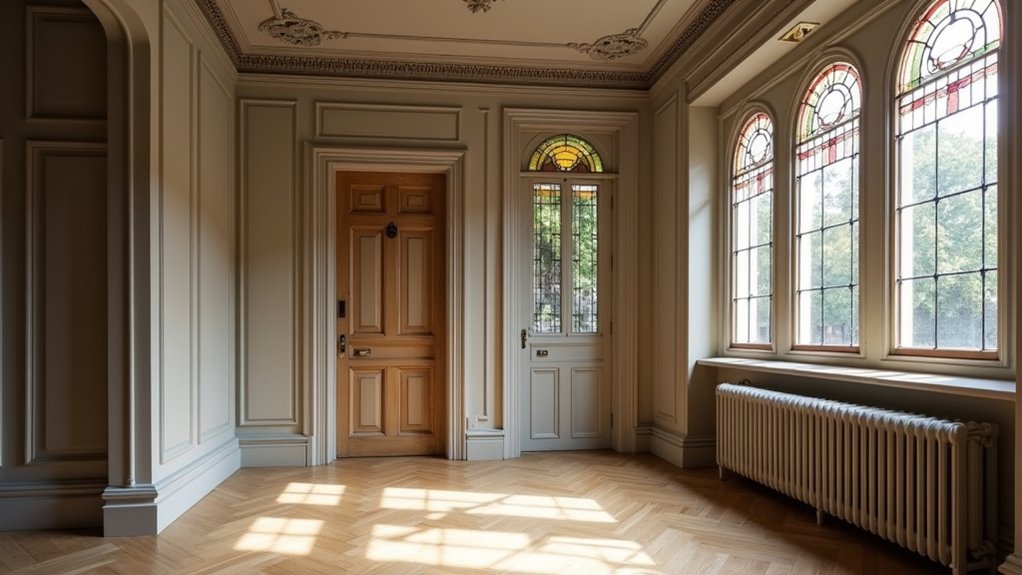
When upgrading security in a Victorian conversion, protect original joinery, masonry, ironmongery, and decorative glass from irreversible damage. Choose reversible methods that support Historical preservation while delivering dependable protection.
- Fit door sensors with removable adhesive pads or discreet, surface-mounted brackets; don’t drill ornate timber.
- Position cameras on freestanding poles, existing fixtures, or mortar joints, never carved stone or glazed brick.
- Use wireless alarms where cable routes would require chasing walls, lifting floorboards, or cutting cornices.
- Specify slim, colour-matched hardware and conceal cabling behind removable trims for careful aesthetic integration.
Before installation, photograph each feature and record fixing points. Ask a security installer to test signal strength and tamper resistance without altering fabric.
Use magnetic contacts on secondary doors, vibration sensors near vulnerable windows, and internal detection where external equipment would dominate.
Review every fixing with your contractor, then remove systems cleanly if you redecorate or sell.
Check Costs, Permissions, and Resale Value
Budget the full security upgrade before approving work, including equipment, installation, electrical changes, access equipment, maintenance, and future battery or subscription costs.
Create a cost analysis that separates one-off expenditure from recurring charges, then obtain comparable quotations from qualified installers.
Check whether your freeholder, managing agent, mortgage lender, or insurer requires approval, and record all permission considerations before drilling, rewiring, or altering communal areas.
In a listed building or conservation area, contact the council’s planning and conservation teams; listed-building consent may apply even to discreet fixtures.
Confirm that contractors carry appropriate insurance and provide compliance certificates.
For resale, retain invoices, warranties, manuals, and consent records.
Choose removable, sympathetic equipment and explain its benefits to buyers.
A documented, professionally installed system can strengthen buyer confidence, while unauthorised work can delay transactions or reduce offers.
Frequently Asked Questions
How Can Buyers Verify a Victorian Conversion’s Previous Burglary History?
You can verify burglary history by requesting police-record data, asking sellers and managing agents for incident disclosures, checking neighbours and local forums, reviewing insurance claims, and comparing Historical burglary trends with documented Security upgrade costs.
Who Is Responsible for Maintaining Security Systems in Leasehold Conversions?
You’re responsible for day-to-day checks, batteries, and reporting faults; landlords or freeholders typically fund communal equipment, while Security system providers handle servicing. Check your lease carefully: Tenant responsibilities and maintenance obligations may differ.
Does Victorian Conversion Insurance Require Specific Security Certifications?
Usually, Victorian conversion insurance doesn’t mandate specific security certifications. However, your insurer may require compliant locks, monitored systems, or installer accreditation. Check policy wording carefully, document Historical security standards, and maintain Modern alarm systems professionally.
How Should Residents Handle Lost Keys or Compromised Access Codes?
If you lose keys or suspect compromised credentials, report it immediately, request Key replacement, and complete an Access code reset. Disable affected fobs, verify identity, document changes, and notify residents before restoring authorised access.
Can Security Upgrades Affect a Conversion’s Listed-Building or Conservation-Area Status?
You can upgrade security without changing listed-building or conservation-area status, provided you preserve Historical integrity. Consult conservation officers first; document reversible works, meet security compliance, and obtain consent before altering historic doors, windows, façades, or protected features.
Conclusion
Ultimately, securing a Victorian conversion means balancing modern protection with architectural restraint. Start with certified multi-point locks, controlled entry, monitored cameras, and well-positioned lighting, then confirm every installation complies with leases, planning requirements, and fire-safety rules. The Metropolitan Police reports that burglary drops by around 20% when properties use effective security measures—a compelling reason to act. Choose reversible, professionally fitted upgrades, document approvals, and you’ll improve safety, insurance confidence, and resale appeal without sacrificing period character.